



Battery Powered Pruning Saws: Yard Work Made Simple

Across the United States, pruning is an essential operation for growers in vineyards, orchards, and olive groves. It directly impacts crop yield, plant longevity, and harvest efficiency. However, the process is physically demanding, time-sensitive, and labor-intensive.
Historically, growers have relied on manual saws or gas-powered tools. While effective, these tools often lead to fatigue, inconsistent cutting, and elevated injury risks. As the agricultural sector evolves, there's an increasing demand for battery powered pruning saws, tools that deliver performance, safety, and ease of use.
This shift is more than a passing trend; it's part of a broader movement toward sustainable, efficient, and ergonomic farming practices.
What Makes Battery Powered Tools a Professional’s Best Choice
Ergonomics and Operator Comfort
Battery powered pruning saws are designed for daily professional use. Their features reflect the needs of teams working long shifts in repetitive motion environments.
-
Lightweight frames (often under 1.5 kg) reduce strain
-
Non-slip grips and balanced design improve precision
-
Tools are often one-hand operable, freeing the other hand for positioning
Ergonomics are particularly important when pruning thousands of vines or trees per season. Reducing operator fatigue leads to higher quality cuts and fewer accidents.
Autonomy and Battery Management
Modern lithium-ion batteries offer strong performance:
-
2.5Ah to 5Ah batteries provide 4 to 10 hours of runtime
-
Quick charge systems replenish power in under 2 hours
-
Swappable battery systems allow seamless replacement mid-shift
Professional teams typically manage battery rotation schedules. Charging stations are placed in trucks or field posts, ensuring that downtime is minimized during peak productivity hours.
Where These Tools Shine: Key Use Cases
Vineyards (California, Oregon, New York)
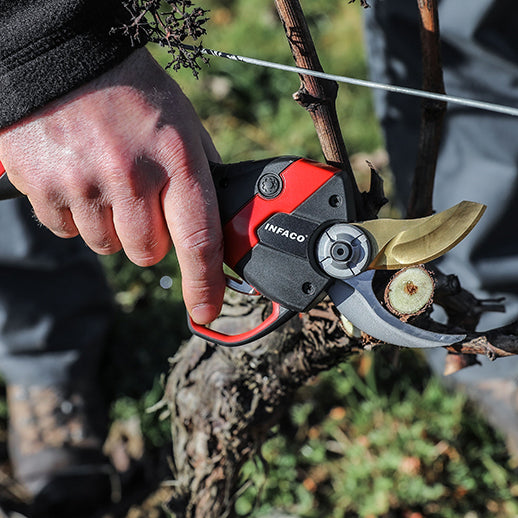
In vineyards, pruning determines grape yield and quality. The work requires repetitive, controlled movements, ideal for battery powered tools. The quiet operation also respects nearby residential areas and enables communication among workers.
Orchards (Washington, Michigan, New York)
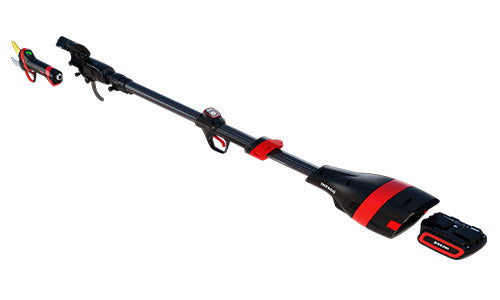
Apple and pear trees demand careful canopy control. Pruning heights vary, so compatibility with telescopic poles is essential. Battery-powered tools minimize the risk of overexertion and offer safer use on ladders or platforms.
Olive Groves (Texas, Arizona, California)
Pruning olive trees often involves removing thick, hardwood branches. High-torque battery tools offer controlled power delivery, preventing tool jamming and operator fatigue even under demanding conditions.
Regional and Climatic Considerations
Pruning Timing Varies by Region
The ideal pruning season ranges depending on crop type and climate:
-
Southwest US (e.g., Arizona, Southern California): Pruning may start as early as October due to warmer winters.
-
Pacific Northwest: Cold and wet winters delay pruning to late November or December.
-
Northeast and Midwest: Pruning typically begins in December or January, depending on snow and ground conditions.
Battery performance is influenced by temperature. Modern batteries retain 80–90% capacity down to 32°F (0°C), but performance may drop below that. It’s recommended to keep spare batteries in insulated carriers when working in colder regions. Some brands also offer yearly maintenance programs to support optimal battery performance, such as this one.
Performance Comparison: Battery vs Gas vs Manual
|
Feature |
Battery Powered Saw |
Gas-Powered Tool |
Manual Tool |
|
Emissions |
Zero |
High (CO2, VOCs) |
Zero |
|
Noise Level |
Low |
High |
Very Low |
|
Maintenance |
Minimal |
Frequent (fuel, oil) |
Occasional (sharpening) |
|
Weight |
Light |
Medium to Heavy |
Light |
|
Startup Time |
Instant |
Delayed (pull-start) |
Instant |
|
Fatigue Impact |
Low |
Moderate |
High |
|
Worker Safety |
High |
Variable |
Moderate |
|
Daily Productivity |
High |
Medium |
Low |
Safety Gains and Worker Health
In pruning operations, safety is critical. Battery-powered pruning saws improve working conditions through:
-
Lower vibration output, reducing risks of tendinitis and carpal tunnel syndrome
-
Safety triggers and auto-stop features, reducing accidental activation
-
Low-noise operation, enabling verbal communication in teams
-
Minimal exhaust exposure, improving air quality for the operator
These features are vital in professional environments where the same team may perform thousands of cuts per day. Reducing strain not only protects workers but increases long-term productivity.
Organizing a Professional Pruning Team with Battery Tools
Efficient pruning isn't just about having the right tools, it's about optimizing their use across a crew. Here's how professional growers typically structure pruning operations:
-
1 tool per worker, with 2 batteries per tool to allow rotation
-
1 charging point per 3 - 4 workers, mobile if working across large fields
-
Daily pre-check routines (blade sharpness, battery charge, safety mechanisms)
-
Logbooks to track tool performance and maintenance needs
Proper training ensures workers know how to change blades, recognize battery alerts, and work ergonomically. Many crews use short video modules or in-field demos at the start of each season.
Selecting the Right Tool for Your Operation
Before purchasing battery powered pruning saws, growers should evaluate:
1. Battery Type and Capacity
Choose lithium-ion batteries for energy density and recharge speed. For large operations, dual battery kits reduce downtime.
2. Blade Versatility
Look for tools that accept multiple blade types for fine and coarse cutting. Interchangeable systems are ideal for mixed-use farms.
3. Tool Weight
Under 1.3 kg is recommended for most users. Heavier tools may require harness support.
4. Pole Compatibility
For tall trees, check if the tool is compatible with telescopic or fixed poles. Some systems offer click-in adapters.
5. Warranty and Service
Select suppliers with US-based service options, available spare parts, and responsive support.
Pre-Season Setup Checklist
To prepare for pruning season, teams can use the following checklist:
-
Confirm battery and charger inventory
-
Test all tools for functionality
-
Inspect blades for damage or wear
-
Assign tools to specific team members
-
Define charging schedules and rotation plans
-
Provide safety and usage briefings
Preparation ensures a productive start and reduces tool-related interruptions during peak season.
Sustainability and Compliance Advantages
Battery powered tools help growers align with:
-
Emission regulations (e.g., California’s CARB restrictions on small engines)
-
Sustainability certifications, like SIP Certified or CSWA
-
Workplace safety standards, reducing vibration and noise exposure
Many states offer financial incentives for battery tool adoption under clean agriculture programs. Over time, cost savings include:
-
Eliminated fuel purchases
-
Lower maintenance costs
-
Extended worker retention from improved conditions
Why Fall Is the Right Time to Transition
With most pruning activities beginning in late fall, growers benefit from preparing their tools and teams in October and early November. Early setup offers:
-
Better tool availability before seasonal demand peaks
-
Time for operator training and dry runs
-
Fewer risks of stock shortages or delayed shipping
A well-prepared team can increase productivity by 20–30% during the crucial weeks of pruning.
FAQ: Battery Powered Pruning Tools
Are battery powered pruning saws suitable for thick branches?
Yes, professional models are designed to cut branches up to 90 mm in diameter, depending on blade and torque settings.
How long do batteries last during a typical workday?
Most batteries last 4 to 8 hours per charge, depending on wood type and cutting frequency.
Do battery tools work in cold weather?
Yes, though battery efficiency may drop below 32°F (0°C). Keeping spares warm improves performance.
Are these tools safe for untrained workers?
With proper training, yes. Most models have safety locks, trigger guards, and auto-stop features.
What is the typical lifespan of a battery powered pruning saw?
With regular maintenance, tools can last 5+ years, and batteries can be cycled 500+ times before replacement is needed.
For additional pruning best practices, growers can refer to the USDA pruning guidelines
Conclusion
Battery powered pruning saws are redefining the way professionals manage winter crop care. Whether in vineyards, orchards, or olive groves, these tools bring measurable improvements in safety, efficiency, and cost control.
By preparing early and choosing the right equipment, growers can ensure a successful pruning season, one that's cleaner, quieter, and more productive.


